
















 English
A Complete Guide to Directional Performance of Torsion Springs
In mechanical systems, industrial equipment, and everyday applications, the torsion spring is a widely used elastic component—but also one that is often misunderstood. Engineers, buyers, and end users frequently ask an important question: do torsion springs work in both directions?
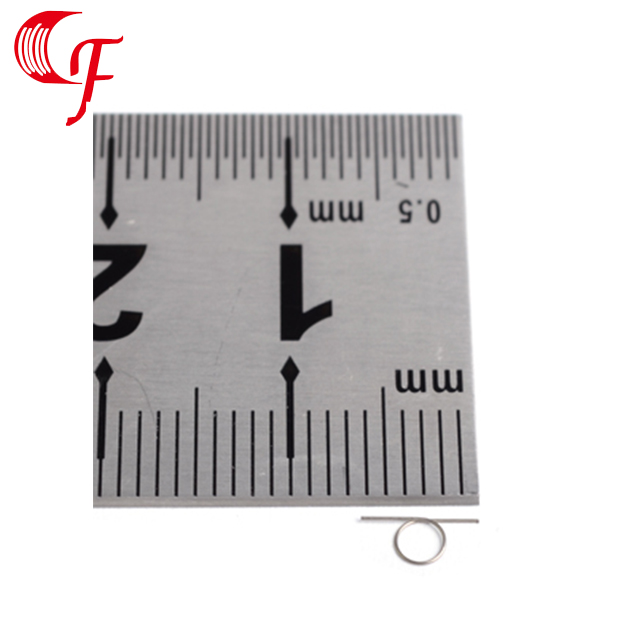
1. What Is a Torsion Spring?
A torsion spring is a type of rotational spring that stores and releases energy through angular deflection rather than linear compression or extension. Unlike compression or extension springs, torsion springs operate by twisting around their axis.
When force is applied to rotate the spring legs, torque is generated within the spring body. This torque resists the applied force and attempts to return the spring to its original position. Because of this behavior, torsion springs are commonly used in:
Hinges and pivot mechanisms
Clamps and latches
Industrial automation equipment
Garage door springs
Precision instruments and electronic devices
2. Do Torsion Springs Work in Both Directions?
Short Answer
Yes—but not all torsion springs are designed to work in both directions.
Whether a torsion spring can operate bidirectionally depends on several key factors:
Spring winding direction
Preload and working angle design
Leg configuration and installation method
Whether the spring is a custom torsion spring
3. One-Directional vs. Two-Directional Torsion Springs
3.1 One-Directional Torsion Springs (Most Common)
The majority of standard torsion spring designs are one-directional. This means:
They generate effective torque only when rotated in a specific direction
Rotation in the opposite direction may produce little force or damage the spring
Typical examples include:
Garage door tension springs
Ratchet mechanisms
Single-direction return systems
In these applications, the winding direction (left-hand or right-hand) is strictly matched to the system’s motion.
3.2 Two-Directional Torsion Springs (Special Designs)
With proper engineering, custom torsion springs can be designed to operate in both clockwise and counterclockwise directions.
Key characteristics of bidirectional torsion springs include:
Torque output in both rotational directions
A neutral or centered working position
Symmetrical leg geometry
Such designs are commonly used in:
Medical devices
Precision instruments
Small mechanical assemblies
Miniature torsion springs in electronics
4. Winding Direction and Its Impact on Performance
The winding direction of a torsion spring plays a critical role in determining how it works.
Right-hand wound torsion springs are typically loaded clockwise
Left-hand wound torsion springs are typically loaded counterclockwise
Incorrect loading direction can result in:
Reduced torque output
Permanent deformation
Shortened service life
Therefore, understanding the required direction of rotation is essential during spring selection and installation.
5. Do Garage Door Springs Work in Both Directions?
In real-world applications, garage door springs are almost always single-direction, high-load torsion springs.
Reasons include:
Garage doors require consistent torque in one direction
High torque torsion springs are engineered for controlled rotation
Bidirectional designs would compromise safety and reliability
As a result, garage door tension springs are not intended to work in both directions, and reversing their operation can be dangerous.
6. Directional Characteristics of High Torque Torsion Springs
A high torque torsion spring is designed to deliver substantial rotational force and typically features:
Large wire diameter
High spring rate
Clearly defined loading direction
These springs are widely used in:
Industrial doors
Heavy machinery
Automatic return mechanisms
In high-load applications, stability and safety take priority over directional flexibility, making single-direction operation the standard choice.
7. Miniature Torsion Springs and Bidirectional Capability
Compared to large torsion springs, miniature torsion springs are more suitable for bidirectional operation due to:
Lower working loads
Smaller angular displacement
Easier neutral-position design
They are commonly found in:
Electronic switches
Wearable devices
Medical instruments
Precision clamping mechanisms
In these cases, custom torsion springs are often engineered as true bidirectional rotational springs.
8. Why Choose Custom Torsion Springs?
When standard torsion springs cannot meet bidirectional or specialized performance requirements, custom torsion springs offer the best solution.
Customization allows for:
Bidirectional or multi-directional torque output
Specific working angles
Controlled torque curves
Specialized materials (stainless steel, music wire, alloy steel, etc.)
For advanced equipment and demanding environments, custom-designed torsion springs significantly improve performance and service life.
9. How to Determine If a Torsion Spring Is Bidirectional
You can evaluate whether a torsion spring works in both directions by checking:
Whether it is specified as a bi-directional torsion spring
If the spring legs are symmetrical
Whether it is a custom torsion spring
Engineering drawings showing a neutral working position
Manufacturer technical specifications
Consulting a professional spring manufacturer is always recommended for critical applications.
10. Conclusion: Do Torsion Springs Work in Both Directions?
In summary:
Most torsion springs are designed for one-direction operation
Garage door springs and high torque torsion springs are typically single-direction
Miniature torsion springs and custom torsion springs can be designed for bidirectional use
Directional capability depends on design—not simply on spring type
If your application requires precise bidirectional rotational control, engaging with an experienced spring manufacturer early in the design stage is the most effective way to achieve optimal results with the right rotational spring solution.
