


















 English
1. What Is a Torsion Spring?
A torsion spring is a type of mechanical spring that works by twisting rather than compressing or extending. When torque is applied, the spring stores energy, and when the force is released, it returns to its original shape, delivering rotational force.
Unlike compression or extension springs, torsion springs apply force radially, making them ideal for applications requiring controlled rotation, resistance, or return motion.
2. How Torsion Springs Work
A torsion spring is typically mounted around a shaft or rod. When the spring legs are rotated around the axis:
The spring coils tighten or loosen
Energy is stored as rotational stress
The spring exerts torque in the opposite direction
This makes torsion springs especially effective as Torsion Return Spring components, where parts must return to a neutral or starting position.
3. Key Components of a Torsion Spring
A standard spiral torsion spring includes:
Coils – Store the torsional energy
Legs or arms – Transfer force to connected components
Inside diameter (ID) – Fits around a shaft
Wire diameter – Determines torque strength
Number of turns – Affects energy capacity
These parameters can be customized when ordering custom torsion springs.
4. Types of Torsion Springs
4.1 Single Torsion Spring
A single torsion spring has one coil body and two legs. It is commonly used in small mechanical assemblies and hinges.
4.2 Double Torsion Spring
Double torsion springs consist of two mirrored springs wound together, offering higher torque and longer cycle life.
4.3 Spiral Torsion Spring
A spiral torsion spring is flat or round-wire spring wound in a spiral shape. It is often used in compact devices where space is limited.
4.4 Garage Door Torsion Spring
A garage door torsion spring is a heavy-duty spring mounted above a garage door opening. It counterbalances the door’s weight, making it easy to lift manually or with a motor.
5. Common Applications of Torsion Springs
Torsion springs are used across countless industries:
Garage doors and overhead door springs
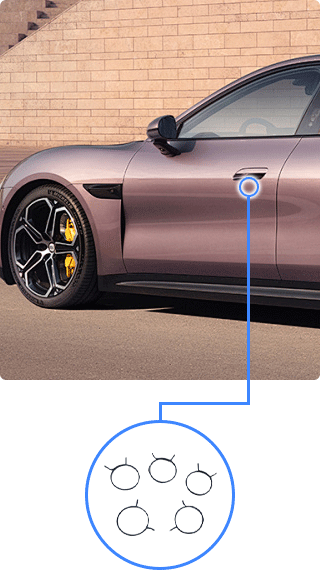
Automotive hinges and latches
Industrial machinery
Agricultural equipment
Electrical switches
Medical devices
Hand tools and clamps
Their reliability and efficiency make them essential in both heavy-duty and precision applications.
6. Garage Door Torsion Springs Explained
6.1 What Do Garage Door Torsion Springs Do?
Garage door torsion springs store energy when the door closes and release it when the door opens, counterbalancing the door’s weight. Without them, lifting a garage door would be extremely difficult.
6.2 Torsion vs Extension Springs
| Feature | Torsion Springs | Extension Springs |
|---|---|---|
| Mounting | Above door | Along tracks |
| Safety | Higher | Lower |
| Durability | Longer life | Shorter life |
| Operation | Smoother | Less stable |
This is why garage door torsion springs for sale are more popular in modern installations.
7. Materials Used in Torsion Springs
Common materials include:
Music wire (high strength)
Oil-tempered wire
Stainless steel (corrosion resistance)
Galvanized steel (outdoor use)
Material selection is critical for performance and lifespan, especially in overhead door springs exposed to environmental stress.
8. Custom Torsion Springs
8.1 What Are Custom Torsion Springs?
Custom torsion springs are designed to meet specific torque, size, and cycle-life requirements. They are often used in OEM products and specialized machinery.
8.2 Customization Options
Wire diameter
Inside / outside diameter
Leg length and angle
Winding direction (left-hand or right-hand)
Surface finish and coating
Custom solutions ensure precise performance and improved durability.
9. How to Replace Torsion Spring Safely
Replacing a torsion spring—especially a garage door torsion spring—can be dangerous if done incorrectly. These springs store enormous energy.
9.1 Safety Warning
Torsion springs are under extreme tension. Improper handling can cause serious injury.
9.2 Tools Required
Winding bars (never screwdrivers)
Adjustable wrench
Locking pliers
Safety glasses and gloves
9.3 Basic Steps: How to Replace Torsion Spring
Disconnect the garage door opener
Secure the door in the closed position
Release tension from the old spring carefully
Remove the damaged spring
Install the new torsion spring
Wind the spring to specified turns
Tighten set screws and test balance
For most homeowners, professional replacement is strongly recommended.
10. Signs a Torsion Spring Needs Replacement
Loud bang from garage
Door feels extremely heavy
Door opens unevenly
Visible gap in the spring coil
Door won’t stay open
These are clear indicators that garage door torsion springs have failed.
11. Overhead Door Springs in Commercial Use
Overhead door springs are used in warehouses, factories, and logistics centers. They are larger, stronger, and designed for high-cycle operation.
Commercial systems often require custom torsion springs engineered for thousands of cycles per year.
12. Buying Garage Door Torsion Springs
When looking for garage door torsion springs for sale, consider:
Door weight and height
Spring size and torque rating
Cycle life (10,000 / 20,000 / 50,000 cycles)
Manufacturer quality and certifications
Incorrect spring selection can damage doors and openers.
13. Advantages of Torsion Springs
High energy efficiency
Long service life
Smooth and controlled motion
Compact design
Reliable torque output
These benefits explain why torsion springs outperform many alternative spring types.
14. Maintenance Tips for Torsion Springs
Lubricate annually
Inspect for corrosion or cracks
Avoid DIY adjustments without proper tools
Replace springs in pairs for balance
Proper maintenance extends the life of torsion Return Spring systems.
15. Frequently Asked Questions (FAQ)
Q1: How long do torsion springs last?
A: Typically 7–15 years depending on usage and cycle rating.
Q2: Can I replace just one garage door torsion spring?
A: It’s recommended to replace both to maintain balance.
Q3: Are custom torsion springs expensive?
A: Cost depends on design, but they often reduce long-term maintenance.
Q4: What is the difference between left-hand and right-hand winding?
A: It refers to the direction the spring coils tighten under load.
16. Conclusion
So, what are torsion springs? They are essential mechanical components that store and release rotational energy, enabling smooth, controlled motion in countless applications. From spiral torsion spring designs in compact devices to heavy-duty garage door torsion springs, their versatility and reliability are unmatched.
Understanding torsion spring types, knowing how to replace torsion spring systems safely, and choosing the right custom torsion springs or overhead door springs ensures optimal performance and long service life.
Whether you are a homeowner, engineer, or industrial buyer, torsion springs remain a foundational element in modern mechanical design.
