












 English
Inductors are crucial passive electronic components used in countless electrical and electronic circuits. Among them, the Inductor Coil—also commonly called a coil inductor or inductance coil—is responsible for performing one of the most fundamental tasks in electronics: storing energy in a magnetic field. But what does an Inductor Coil really do, how does it work, and why is it so essential in modern technology?
1. What Is an Inductor Coil?
To understand what is an inductor coil, we first need to break down its basic definition.
An inductor coil is a passive electronic component made by winding conductive wire (usually copper) into a coil shape. This coil creates a magnetic field when electrical current flows through it. The ability of the coil to store energy in this magnetic field is known as inductance.
In simple terms, an inductor coil:
Resists changes in current
Stores magnetic energy
Helps regulate and stabilize electrical signals
The higher the number of turns in the coil, and the greater the coil’s magnetic field strength, the higher its inductance value.
2. How Does an Inductor Coil Work?
When electric current flows through a wire, it naturally generates a magnetic field around it. By winding this wire into a helix shape, the magnetic field becomes stronger and more concentrated.
The working principle of an inductor coil is based on Faraday’s law of electromagnetic induction.
When current attempts to change—either increasing or decreasing—the magnetic field also changes. This induces a voltage in the coil that opposes the change in current. This property is called self-inductance.
Thus, an inductor coil:
Smooths current flow
Filters high-frequency noise
Stabilizes power supplies
Stores electrical energy temporarily
This is why inductors are critical in high-frequency electronics, transformers, automotive systems, and power regulation circuits.
3. Types of Inductor Coils
There are many types of coils, each designed for specific applications. The most common include:
3.1 Air Coil Inductor
An air coil inductor uses air as its core material. Since air has no magnetic losses, these coils offer:
High frequency stability
Low core loss
Fast response
They are ideal for RF circuits, antennas, wireless charging, and communication devices.
3.2 Ferrite Core Coil Inductor
These inductors use ferrite materials to increase inductance. They are commonly used in power supplies and filters.
3.3 Toroidal Coil Inductor
Shaped like a doughnut, a toroidal inductor provides high efficiency and low electromagnetic interference.
3.4 Custom Inductance Coil
Manufacturers often design custom inductance coil solutions depending on the required size, inductance value, frequency range, and application environment.
4. Inductor Coil Performance Factors
Several elements influence the performance of an inductor coil, including:
Wire Material
Copper or enameled copper is standard due to excellent conductivity.
Core Material
Air, ferrite, powdered iron, or laminated metals affect inductance and efficiency.
Number of Turns
More turns = higher inductance.
Coil Diameter & Spacing
These determine magnetic field strength and frequency behavior.
Winding Precision
Precise winding reduces resistance, enhances Q factor, and ensures stable performance.
Manufacturing high-performance inductor coils requires both technical expertise and specialized machinery.
5. The Role of an Inductor Winding Machine
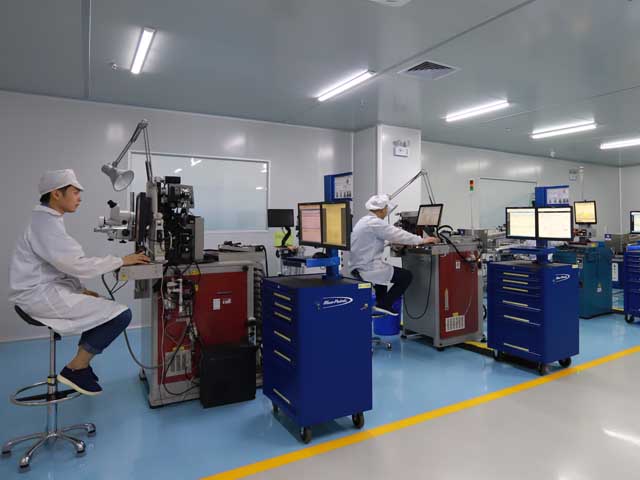
Producing consistent and reliable inductors requires advanced equipment. An inductor winding machine is used to wind conductive wire accurately onto a bobbin, core, or mandrel.
These machines provide several advantages:
High-speed, uniform winding
Consistent inductance values
Low error rate
Suitable for mass production
Ability to handle fine or thick wires
Modern winding machines are CNC-controlled, enabling complex coil structures used in automotive electronics, telecom devices, and industrial equipment.
6. What Does an Inductor Coil Do in an Electrical Circuit?
Inductor coils serve many functions depending on the circuit design. Here are the primary roles:
6.1 Energy Storage
Inductors store energy in their magnetic fields when current flows through them. This is vital for switching power supplies and DC-DC converters.
6.2 Filtering
Inductors filter out high-frequency signals in:
Power supplies
Audio systems
Communication devices
EMI suppression
They block sudden changes in current and smooth output voltage.
6.3 Noise Reduction
By resisting abrupt current spikes, coils reduce electrical noise, ensuring stable and clean signals.
6.4 Inductive Coupling
Coils transfer energy between circuits (transformers, wireless charging pads, RFID systems).
6.5 Oscillation and Timing
Inductors combine with capacitors to create resonant circuits for precise frequency control.
7. Applications of Inductor Coils
Inductor coils are found in almost every modern device, including:
Telecommunications
Radio transmitters
Antennas
Signal tuning systems
RF amplifiers
Power Electronics
DC-DC converters
Inverters
Power factor correction
LED drivers
Consumer Electronics
Smartphones
Computers
Wireless chargers
Speakers
Automotive
EV power systems
Engine control units
Noise suppression modules
Industrial Equipment
Robotics
Automation controls
Sensors
Medical equipment
The versatility of coil inductors makes them indispensable in modern technology.
8. Choosing a Reliable Inductor Coil Manufacturer
Selecting the right inductor coil manufacturer is crucial for industries requiring precision and long-term reliability. A professional manufacturer offers:
Advanced winding technology
High-quality core materials
Strict inductance tolerance control
Custom coil design
Automated inductor winding machines
Compliance with RoHS, REACH, UL, and other standards
A good supplier ensures stable performance, low losses, and long service life across all inductors.
9. Why Inductor Coils Are Vital in Modern Electronics
Inductor coils may seem small and simple, but they are essential in ensuring:
Stable power delivery
Signal clarity
Safe current regulation
Efficient energy transfer
Reliable circuit performance
Without inductors, technologies like 5G communications, automotive electronics, smart grids, renewable energy systems, and consumer devices simply could not function.
10. Conclusion
Understanding what an inductor coil does helps clarify why this component is so essential in electronics. Whether used as an air coil inductor in wireless systems, a power inductor in converters, or a custom inductance coil in industrial devices, the inductor plays a vital role in stabilizing circuits and storing magnetic energy.
From precision winding using advanced inductor winding machines to specialized production by experienced inductor coil manufacturers, every step ensures performance, reliability, and consistency. As technology continues to advance, the importance of inductor coils will only grow, powering the next generation of smart devices, renewable energy solutions, and high-efficiency electrical systems.
